



Google Ads changes Smart Bidding logic: what changed on August 17, 2026
On August 17, 2026, Google updated the bidding logic for campaigns that operate based on target metrics. The goal of […]


Demand for goods and services on the Internet rarely remains stable throughout the year. User interest changes at different times, which affects website traffic and sales. Therefore, it is important for businesses to understand what seasonality is, how it manifests itself in search, and what types of demand exist in different niches. In this article, we will look at how to identify seasonal fluctuations, forecast SEO traffic, and prepare your site for peak periods so as not to lose potential sales.
Seasonality of demand is a regular change in user interest in products, services, or topics during different periods of the year or month. It manifests itself in changes in the frequency of search queries and directly affects the seasonality of traffic. During periods of high demand, the number of clicks to the site increases, and during the low season, the traffic decreases.
Seasonality in SEO affects not only traffic, but also conversions and the level of competition in the search results. For example, in the tourism niche, demand increases before the holidays, in the gift sector, on the eve of the holidays, and in the sale of air conditioners, in the summer. During peak periods, more companies actively promote their pages, so competition for positions in the search increases.
To effectively plan SEO promotion of the site and forecast traffic, it is important to identify periods of growth and decline in interest in your product in advance. To do this, use several data sources that help analyze seasonality and understand when demand begins to change.
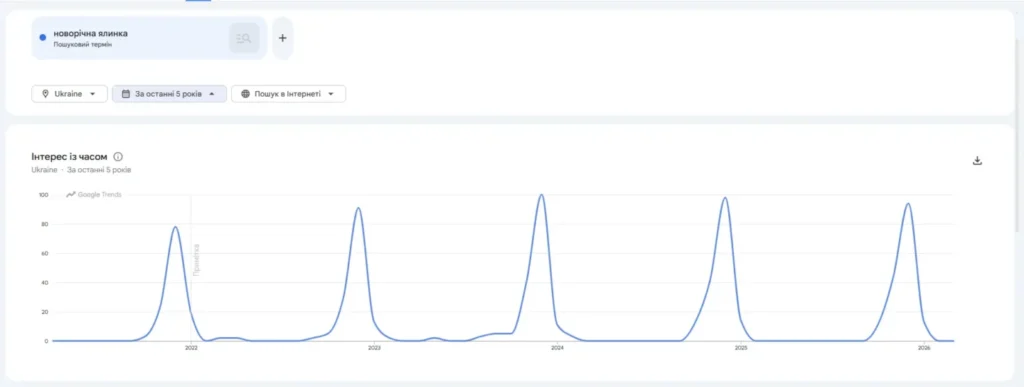
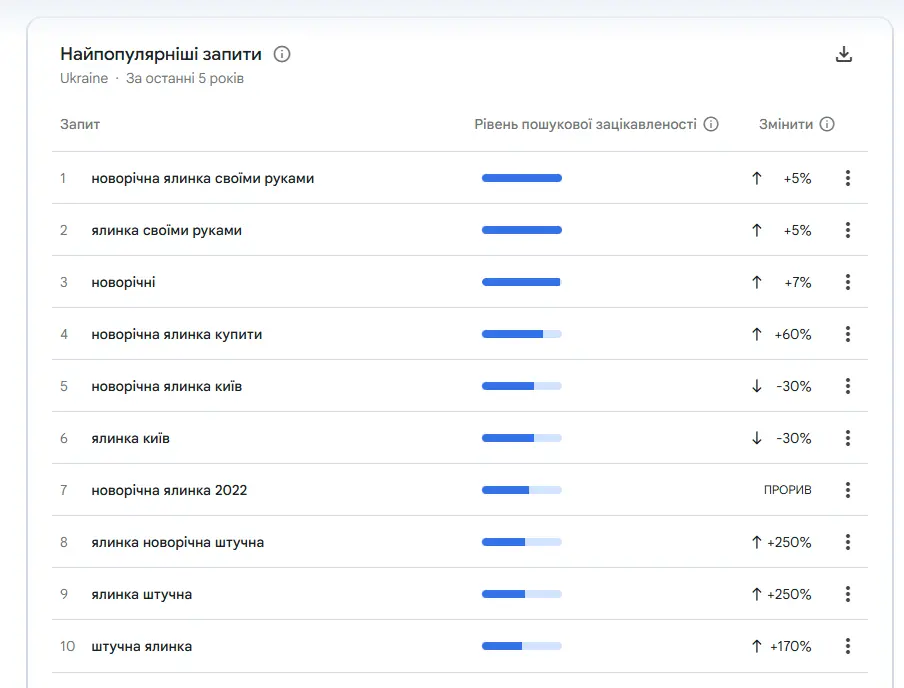
Google Trends helps you explore how the popularity of certain search queries is changing. The service shows the dynamics of interest in the form of a graph, where it is easy to notice regular peaks and declines in demand. It is important to consider that the indicators reflect the relative level of popularity of the query. You can also view popular related queries in Google Trends and see which formulations users used most often in a specific region and during a certain period of time.
Another way to determine seasonality is to examine the statistics of your own site. In Google Analytics, you can view the dynamics of traffic over several years and find recurring peaks or drops in traffic. In Google Search Console, it is worth analyzing changes in impressions and clicks on queries. If traffic increases or decreases noticeably in the same period every year, this may indicate fluctuations in seasonal demand.
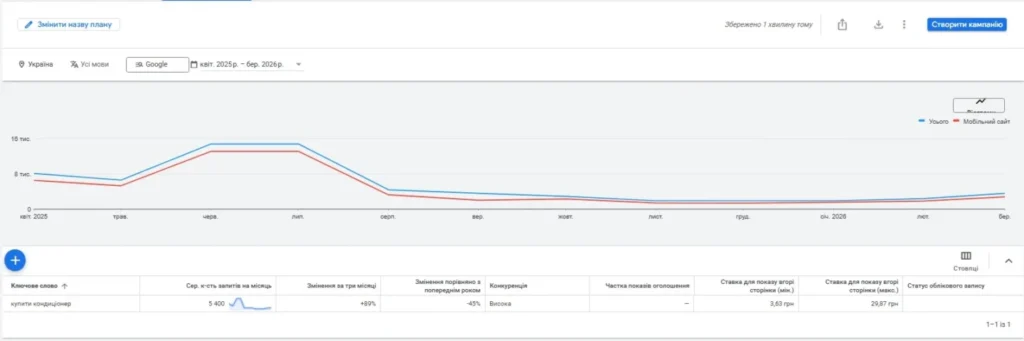
Keyword frequency research also helps to determine seasonality. In the Google Ads Keyword Planner and other SEO tools, you can see how the number of searches changes over different months. Based on this data, the semantic core of the site is formed or adjusted, taking into account periods of increased demand. If the frequency of requests regularly increases during a certain period of the year, this is a signal of seasonal demand. Keyword seasonality analysis allows you to understand when it is worth more actively optimizing pages or launching advertising campaigns.
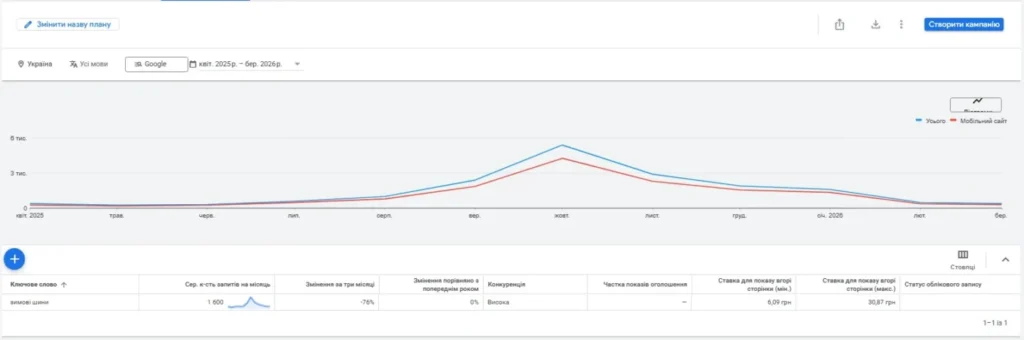

To understand how to forecast traffic, you need to combine several data sources, namely:
This helps to assess how user interest changes at different times of the year.
Traffic forecasting usually involves analyzing Google Analytics and Search Console data from previous years to identify recurring peaks and troughs in traffic. These metrics are then compared with Google Trends and keyword frequency dynamics. Based on this data, you can build a rough forecast – estimate the potential volume of conversions, prepare content, and increase SEO activity before periods of increased demand.
Effective work with seasonal demand requires preparation. To prepare your site for the season and make the most of the period of increased demand, SEO work should be started a few months before peak traffic. Below is a plan for preparing your site – from seasonality analysis and semantic updates to technical optimization, link building and conversion testing.
It is important to note that this is not a universal checklist, as the stages and deadlines may vary depending on the niche, type of site, level of competition and other factors. SEO strategy is usually adapted to each project separately.
| Stage | What to do | When to do | Expected result |
| Seasonality analysis | Analyze demand, trends and previous year’s data | 3-4 months before the peak | Understanding the period of increasing demand |
| Semantics collecting and update | Update keywords with seasonality | 3 months before peak | Full list of relevant queries |
| Content update | Update texts, add new blocks, optimize for SEO | 2-3 months before peak | Improving page relevance |
| Technical optimization | Check speed, mobility, indexation | 2 months before peak | No technical limitations |
| Internal linking | Strengthen important pages through internal links | 1-2 months before peak | Better ranking of key pages |
| Link building | Launch or increase external promotion | 2-3 months before peak | Increase site authority |
| Landing page preparation | Create or update seasonal pages | 1-2 months before peak | Readiness to receive traffic |
| Conversion testing | Test forms, CTAs, UX | 2-4 weeks before Peak | Maximizing conversions |
| Monitoring and adjustment | Track positions, traffic, and user behavior | During the season | Quickly respond to changes |
When preparing your site, it’s also worth checking for Schema.org markup. It helps search engines better understand page content and can increase the chance of rich snippets appearing in search results – ratings, prices or FAQ blocks, which increases your site’s visibility and click-through rate during seasonal traffic spikes.
It’s also important to check the structure of the content on your pages. Properly used H1-H6 headings help create a clear hierarchy of content and make it easier for search engines to understand the structure of the page.
Periods of reduced demand do not mean a complete stop in sales. On the contrary, at this time it is worth working on the visibility of the site, content and marketing offers to maintain the interest of the audience and prepare for the next increase in demand. To do this:
Seasonality of demand significantly affects the results of SEO promotion, traffic and sales. Analysis of trends, historical data and frequency of requests helps to identify in advance periods of increased audience interest and prepare the site for peak load. Systematic work with content, semantics and technical optimization allows you to effectively use seasonal opportunities and reduce the risk of losing traffic during periods of decline.
If your business needs a professional promotion strategy, contact the Lanet CLICK marketing agency. The team of specialists offers comprehensive digital services: SEO promotion, contextual advertising, SMM and other Internet marketing tools that help to consistently attract traffic and increase sales.


On August 17, 2026, Google updated the bidding logic for campaigns that operate based on target metrics. The goal of […]

What if an advertising campaign could find new customers on its own, create more relevant ads, and optimize its performance? […]
Clicked a link but saw a 404 Not Found message instead of the page you expected? This is one of […]
A good strategy, perfectly selected digital tools, and their effective application will allow the business to increase profits, grow the customer base, and form recognition and loyalty. Do you want something like that? Contact us.