Meta’s advertising system divides all content into three key groups: products and services that are completely prohibited from being advertised, categories subject to strict restrictions, and permitted offerings. The specialists at Lanet CLICK have taken an in-depth look at what cannot be advertised on Instagram in 2026 under the latest updates to Meta’s official policy, and what to do if an ad fails the review process.
How Instagram’s advertising rules work (Meta Advertising Standards)
When launching advertising campaigns on Instagram, Meta’s systems review not only the product or service itself but also the ad content (text, images, and videos), as well as the targeting settings and landing page. If the automated system flags an ad for further review, the ad may undergo an additional review by a moderator. This is why Meta’s Advertising Standards may reject a post even when everything appears to be completely harmless.
To successfully set up advertising on social media, it is important to remember that all product and service categories can be divided into three groups: permitted, prohibited, or permitted only under certain conditions.
What you cannot advertise on Instagram
First and foremost, it is necessary to understand what cannot be advertised through targeted advertising under any circumstances. This category includes the following products and services:
- narcotic substances and their legal analogues;
- weapons, ammunition, and explosives (for example, cartridges sold in a hunting equipment store);
- tobacco, vapes, and e-liquids;
- counterfeit goods, including replicas of well-known brands;
- fraudulent schemes;
- spy equipment (for example, hidden cameras);
- document forgery;
- sexual services and content that incites hatred;
- pseudoscientific products.
Since Meta’s advertising rules are the same across all of the company’s platforms, categories prohibited from being advertised on Instagram are also prohibited in Facebook targeting.
Getsolutions for your business
What you can advertise only with restrictions or prior approval
Between permitted and prohibited products on Instagram, there is a third group: categories that are not entirely banned but are subject to additional requirements. Restrictions depend on the country, audience age, product type, and ad format, and often on prior approval from Meta.
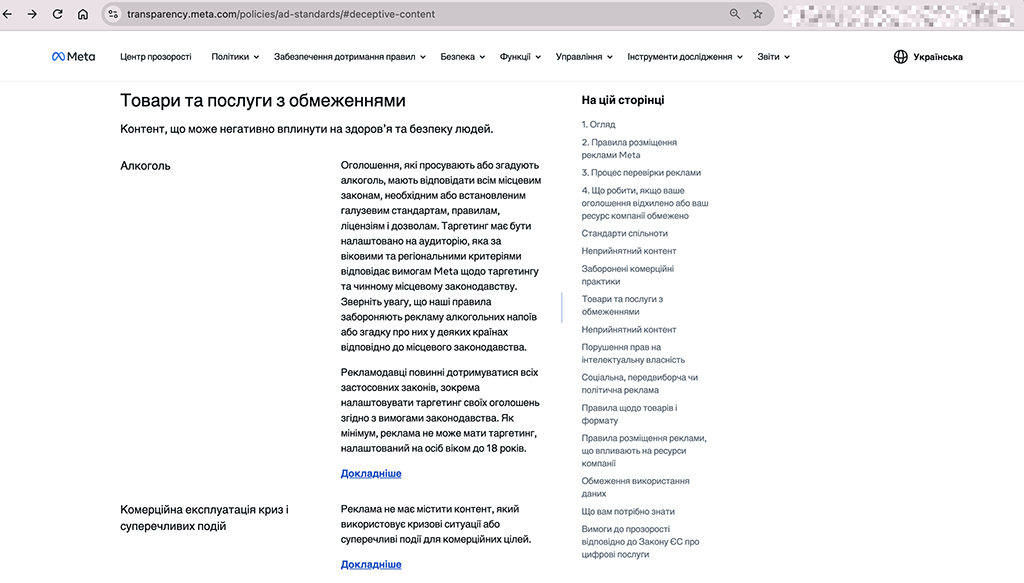
Alcohol, cryptocurrency, and gambling raise the most questions. Alcohol advertising is permitted only in certain locations and only with age targeting. Cryptocurrency requires prior approval, while gambling also requires a license in the country where the ads are shown.
Health-related products are also subject to strict scrutiny. Online pharmacies, telemedicine, and prescription medications must obtain LegitScript certification from Meta in a number of countries. Advertising for dietary supplements is permitted without claims of therapeutic effects, while dangerous supplements, such as anabolic steroids, are completely prohibited. Weight-loss advertising may be shown only to adults and must not contain unrealistic promises.
Additional requirements also apply to financial services and political advertising. Depending on the category, advertiser verification and licenses may be required. In addition, such ads must be targeted at audiences aged 18 and over.
Setting up targeted advertising on Instagram for categories that require special permits, certifications, or licenses for publication requires extensive practical skills, an understanding of moderation algorithms, and knowledge of all the platform’s nuances. Launching campaigns independently often leads to the advertising account being blocked due to Meta’s strict rules, so it is better to delegate this task to professionals.
Prohibited practices in ad creatives and copy
Even an allowed product may fail the review process if it is advertised incorrectly. The way an ad is presented is often the main reason why an Instagram ad is rejected, even when the category itself is technically permitted.
There are usually three types of problems with ad copy. The first is misleading claims: a 100% guarantee of results, fabricated reviews, or a discount based on an artificially inflated price. The second involves exploiting fear or insecurities, as well as clickbait headlines. The third is addressing users’ personal characteristics with phrases such as “Are you suffering from…”, because such wording implies that Meta knows private things about a person.
Similar restrictions apply to visuals. These include shocking content, overly sexualized imagery, discriminatory statements, and unrealistic “before and after” photos. Such elements not only lead to ad rejection but can also work against the advertiser: repeated violations reduce trust in the account and increase the risk of restrictions being imposed on it. Over time, this can make it more difficult to build an audience for targeted advertising. If you still don’t understand why Instagram did not approve your ad, review the ad copy, visuals, and audience targeting settings.
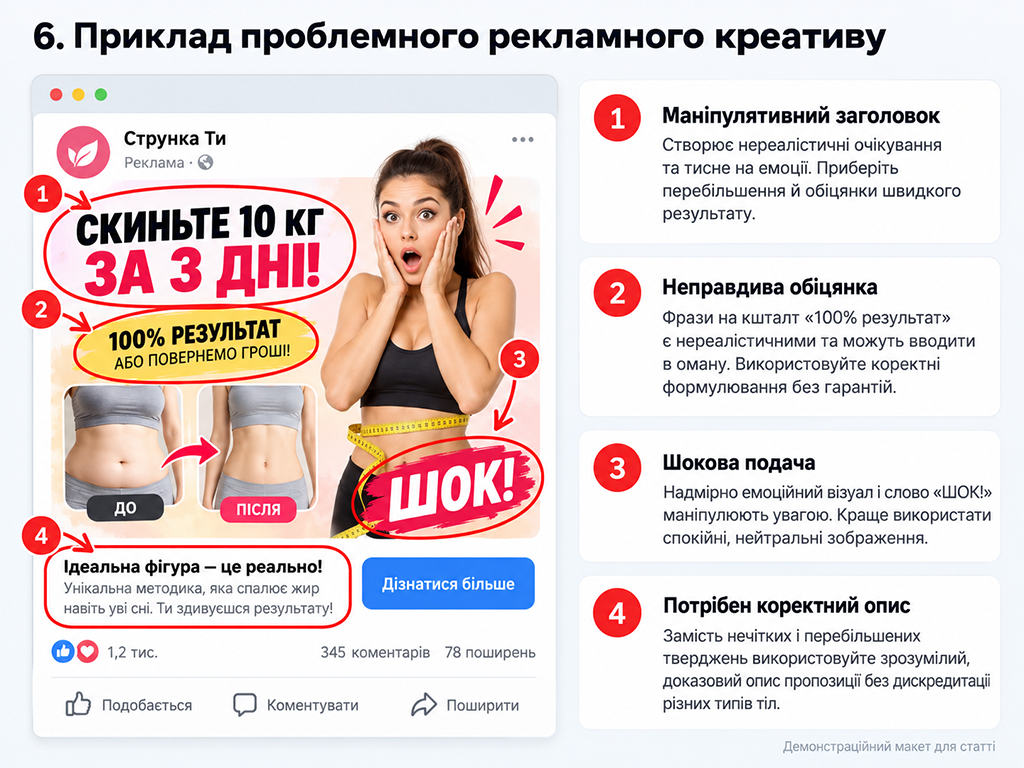
Prohibited phrases in Instagram Ads and what to replace them with: examples table
| Topic |
Risky wording |
Safer alternative |
Why it poses a risk |
| Health |
“Your depression will go away in a week” |
“Group stress management course: registration is now open” |
Refers to a diagnosis and promises a specific outcome |
| Finance |
“We’ll pay off your debts in a month” |
“Debt restructuring consultation: details and fees” |
Misleading financial promise and reference to personal financial circumstances |
| Weight loss |
“Lose 10 kg in 2 weeks” |
“An 8-week workout program for beginners” |
Unrealistic promise of results |
| Before and after |
“Before and after” photos showing body transformation |
Photos of a workout in progress, a gym, or a general shot without comparison |
Restrictions on “before and after” imagery in sensitive contexts |
| Earnings |
“Earn $1,000 a day from home” |
“Freelancing fundamentals course: curriculum, format, and price” |
Misleading income promise |
| Guarantees |
“100% guaranteed results” |
“Refund policy if the course isn’t right for you” |
Absolute guarantees can be misleading |
| Medicine |
“This dietary supplement replaces antibiotics” |
“Vitamin supplement: ingredients and directions for use” |
Misleading claim about therapeutic effects |
| Clickbait |
“Doctors hate this! One simple trick” |
“5 skincare mistakes explained by a cosmetologist” |
An sensational but uninformative headline that may not match the landing page |
| Alcohol |
“Alcohol that relieves stress” |
“Wine tasting at a bar: menu and event date” (with 18+ age targeting) |
Encourages consumption; age and country restrictions apply |
| Crypto |
“Invest $100, get $1,000” |
“Financial literacy course: topics covered” |
A typical red flag for a fraudulent scheme |
It is important to understand that even safer wording does not guarantee approval; it only reduces the risk of the ad being blocked. For topics such as alcohol, cryptocurrency, and other restricted categories, changing the wording does not remove the standard requirements regarding age, country, and the required permits. The final decision on whether to approve an ad is made by Meta’s algorithms.
Instagram advertising rules in Ukraine
In addition to Meta’s advertising policies, advertising campaigns must comply with Ukrainian legislation. When preparing ad creatives, it is necessary to take into account both platform rules and the Law of Ukraine “On Advertising”.
The law prohibits unfair advertising, including misleading and covert advertising, as well as discriminatory ads that demean people on the basis of national, racial, or religious identity. Advertising tobacco products is generally prohibited; alcohol must not be targeted at minors or be promoted with claims that it improves health; prescription medicines must not be advertised to the general public; and gambling is permitted only for licensed operators. These are the very rules that determine what cannot be promoted on Instagram in Ukraine without risking a fine.
In the event of legal violations, regulatory authorities may impose fines on advertisers, making legal review of ad creatives no less important than technical checks. If you are unsure whether your advertising campaigns meet all the requirements, it is best to order internet marketing services from Lanet CLICK. Our specialists understand both the technical aspects of launching advertising campaigns and the legal nuances involved.
What to do if your ad is rejected or your account is blocked
If your ad has been rejected, you do not necessarily need to create a new creative from scratch – usually, it is enough to correct one specific element. In general, the process of appealing a rejected ad can be divided into several simple steps:
- Check the reason for rejection in Ads Manager.
- Identify the problematic element (copy, creative, audience, landing page, or the category itself).
- Make the necessary changes and resubmit the ad for review.
- If the decision seems incorrect, submit an appeal with an explanation.
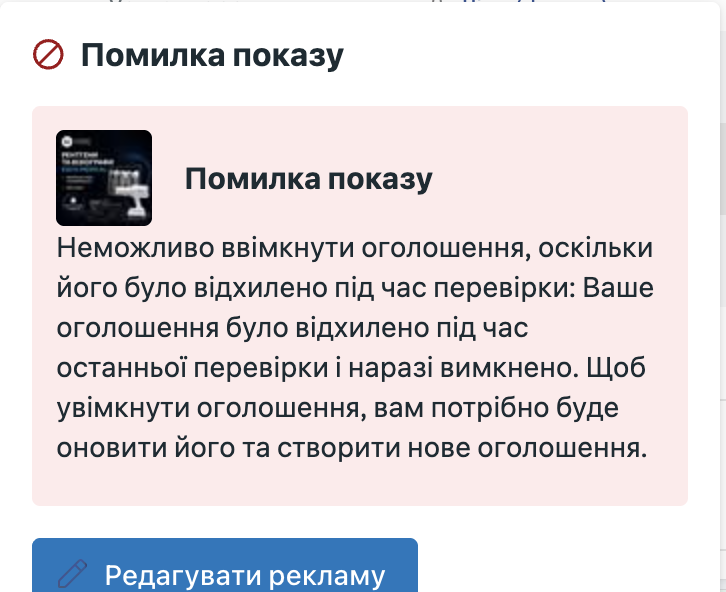
Resubmitting prohibited advertising on Instagram without making any changes almost always leads to the same result. If violations occur repeatedly, the consequences become more serious. Repeated policy violations or suspicious activity may result in advertising restrictions or account disablement.
The question of how to avoid a Meta advertising account ban comes down to regularly checking campaigns and associated assets for compliance with the rules. If you are unable to work through all the specifics on your own, we recommend choosing a targetologist who has an in-depth understanding of the moderation process.
Instagram Ads pre-launch checklist
To ensure that your post complies with Meta’s requirements, we recommend checking every ad against this checklist:
- category – the product or service you are promoting must not belong to a category that is prohibited from being advertised on Instagram. If you promote products that are permitted only under certain restrictions, prepare all the required permits and licenses in advance;
- text and creative – the ad must not contain manipulative promises, shocking content, discriminatory appeals, or other prohibited practices;
- targeting – set the age range in accordance with the requirements for your product category;
- landing page – make sure the website works correctly, matches the ad content, and includes contact details, terms and conditions, and licenses;
- legislation – the ad must comply with the laws of the country whose audience it targets, as well as consumer protection and personal data protection requirements.
To avoid account restrictions, it is important to strictly follow Meta’s policies and local legislation. If you are just starting to learn about the specifics of targeted advertising, we recommend allowing for a trial period to test creatives safely. To save time and protect your budget, order targeted advertising setup services from Lanet CLICK.