


Google Ads changes Smart Bidding logic: what changed on August 17, 2026
On August 17, 2026, Google updated the bidding logic for campaigns that operate based on target metrics. The goal of […]


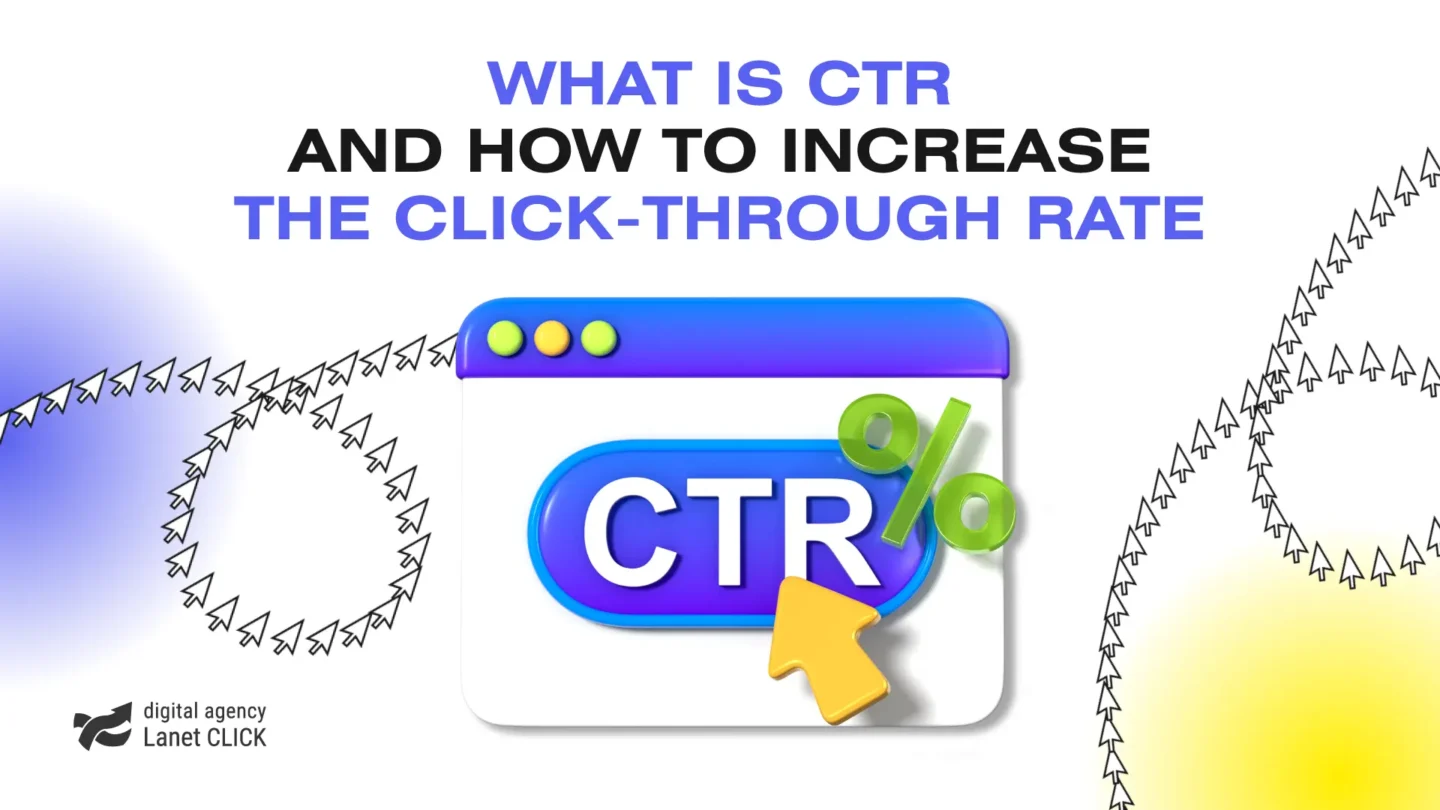
CTR helps determine whether ads and organic search results attract the attention of potential customers. But what is CTR in practice, and does a high click-through rate mean that a business will generate more sales? Not necessarily, as users may click a link but fail to find the offer they are looking for or take the desired action. That is why it is important to interpret this metric correctly and take promotion goals into account. Let’s explore how to calculate CTR, why conversion rates may be low, what benchmarks to use for evaluation, and how to improve click-through rates in Google Ads, SEO, and targeted advertising.
CTR (Click-Through Rate) is a metric that shows what percentage of users who saw an ad or other content clicked on it. The following formula is used to calculate CTR:
CTR = (number of clicks / number of impressions) × 100%.
For example, if an ad received 1,000 impressions and 50 clicks, its CTR is 5%. When calculating CTR, it is important to consider the specifics of the channel and the type of report, as the definitions of impressions and clicks may vary depending on the platform.
The click-through rate helps determine how effectively ads and search snippets attract the audience’s attention. This metric is useful for several purposes:
At the same time, a high CTR does not guarantee sales. For example, the number of clicks may increase after a headline change, but if the headline promises more than the page delivers, the conversion rate will drop. Therefore, CTR is analyzed alongside conversion rate, CPA/CPL, and other metrics in line with the campaign’s goals.

There is no single CTR value that can be considered good for all campaigns. The average CTR depends on the promotion channel and the conditions under which ads are displayed. When evaluating performance, several factors should be taken into account:
Therefore, a good CTR is one that meets the requirements of a specific campaign and improves compared with previous results or relevant industry benchmarks.
| Channel | How CTR is calculated | What the metric depends on | How to evaluate CTR |
| Search advertising (Google Ads) | Ad clicks ÷ ad impressions × 100% | The relevance of keywords to search intent, ad copy, competition, ad position, and whether the audience is branded or non-branded | Compare campaigns, ad groups, and keywords under similar conditions. Also analyze conversions, CPA, and the relevance of search queries |
| Display advertising (Google Display Network) | Ad clicks ÷ ad impressions × 100% | Visual creative, placement, format, audience, ad viewability, and campaign objectives | Compare ads within similar campaigns and formats. For display advertising, it is important to consider reach, viewability, conversions, and brand awareness impact, not just CTR |
| Social media (Facebook, Instagram, TikTok) | Number of clicks ÷ number of impressions × 100%, although the specific type of click depends on the platform and the selected metric | Creative, the first few seconds of a video, copy, audience, format, placement, and call-to-action type | Compare the same metrics within the same platform, format, and campaign objective. Separately track link clicks, website visits, conversions, and cost per result |
| Google organic search results (SEO) | Clicks on a website result in Google Search ÷ impressions of that result × 100% | Page position, relevance to search intent, title, snippet, query type, competitors, and additional search features | Analyze Google Search Console data by query and page, taking into account average position, device, and search intent. Compare similar pages and queries rather than evaluating the entire website using a single metric |
These figures should be treated as guidelines rather than universal benchmarks for your project. To evaluate CTR objectively, compare it with the previous results of your own campaigns and the performance of campaigns with similar formats, audiences, and objectives.
Click-through rate is influenced by a combination of factors that determine whether the audience notices an offer and wants to click the link. These include:
In SEO, CTR is also affected by page position, query type, and elements of the search engine results page (SERP). In paid advertising, precise targeting settings and how well the ad matches the target audience are important.
Before changing an ad, identify what is limiting its click-through rate: an ineffective headline, an irrelevant query, a low position, or competition.
New search results features also affect SEO CTR. In particular, AI-generated answers can satisfy a query without users visiting a website, reducing organic CTR even when the page maintains its rankings.
The approach to improving website click-through rate depends on the traffic source. In search advertising, it is important to align the ad with the user’s query; in SEO, to make the snippet relevant and appealing; and in targeted advertising, to engage the audience with compelling creatives and offers.
To improve CTR in Google Ads, you should:

Negative keywords filter out irrelevant queries, while adjustments to campaign structure help group keywords more precisely and tailor ads accordingly. Evaluate CTR alongside conversions and acquisition costs to avoid increasing clicks at the expense of irrelevant traffic.
As part of SEO website promotion, the click-through rate of organic search results can be improved by:

Google may generate a snippet based on the page content, so it does not always display the specified meta description. To analyze performance, use Google Search Console to review queries, pages, impressions, clicks, CTR, and position. Start with pages that have a sufficient number of impressions but a lower-than-expected CTR given their position and query type.
On social media, CTR is influenced by the creative, the first frame of a video or the opening line of text, the clarity of the offer, the format, and how well the message matches the audience’s needs.
How to improve CTR:
A high CTR does not always indicate high-quality traffic. Also analyze website visits, conversions, and cost per result to determine which ads deliver real business value.
Click-through rate decreases when ads fail to meet audience expectations or stand out from competitors.
The most common mistakes include:
Keep in mind that clickbait can increase CTR while attracting an irrelevant audience, lowering conversion rates, and undermining trust in the brand. Therefore, evaluate not only click-through rate but also traffic quality, conversions, and cost per result.
Read also: Google Ads budget waste: costly mistakes
Keep in mind that seven days is a guideline for organizing the work, not a guarantee of CTR growth. The time required to obtain results depends on the channel and the volume of data.
An online store selling natural sweeteners and healthy snacks approached the Internet marketing agency Lanet CLICK to attract targeted customers, increase sales, and optimize advertising spend. The team conducted an audit of contextual advertising, optimized existing campaigns, collected new keyword data, added negative keywords, created search and shopping campaigns, and refreshed the creatives. These changes were aimed at improving ad relevance to users’ search queries and increasing their click-through rate (CTR). Over two months, the number of transactions increased by 82.87%, while the cost per transaction decreased by 27.62%.
Learn more about the Google Ads optimization case: https://lanet.click/en/case/kejs-optymizacziya-google-ads-dlya-internet-magazynu-naturalnyh-pidsolodzhuvachiv-ta-korysnyh-smakolykiv/
Hiring specialists is particularly worthwhile in the following situations:
An agency should evaluate not only CTR but also business objectives, traffic quality, conversions, and acquisition costs. Organic search may require a comprehensive SEO audit of the website, while paid promotion may call for a review of advertising campaigns.
Lanet CLICK provides comprehensive website promotion services, including search engine optimization (SEO), contextual advertising (PPC), targeted advertising on social media (SMM), and content marketing to maximize your brand’s visibility. Explore the digital agency’s services or request a consultation to identify growth opportunities for your project.


On August 17, 2026, Google updated the bidding logic for campaigns that operate based on target metrics. The goal of […]
What if an advertising campaign could find new customers on its own, create more relevant ads, and optimize its performance? […]
Clicked a link but saw a 404 Not Found message instead of the page you expected? This is one of […]
A good strategy, perfectly selected digital tools, and their effective application will allow the business to increase profits, grow the customer base, and form recognition and loyalty. Do you want something like that? Contact us.