


AI Max in Google Ads: what it is, how it works, and how to improve campaign performance
What if an advertising campaign could find new customers on its own, create more relevant ads, and optimize its performance? […]


Every day, businesses spend thousands of hryvnias on advertising, but a significant share of campaigns fails to deliver the expected results because of weak creatives. Even a high-quality product and precisely targeted advertising will not work if the ad fails to capture the user’s attention within the first few seconds. The winner is not the one who spends more, but the one who attracts attention more effectively and evokes an emotional response.
Let’s explore which advertising creatives actually work on Instagram, Facebook, and TikTok, which psychological mechanisms influence audience decision-making, and how to create ads with the highest chances of conversion.
An advertising creative is a combination of visuals, copy, video, or animation designed to capture the user’s attention and motivate them to take a desired action. It creates the first impression of a brand and often determines whether a person will stop and engage with the ad.
Even a perfectly optimized advertising campaign will not deliver the desired results if its creatives fail to generate interest. The quality of creative development has a direct impact on click-through rate (CTR), cost per lead, conversion rate, and the overall effectiveness of the campaign.
Every day, users on Instagram, Facebook, and TikTok scroll through hundreds of ads, and they skip uninteresting content within seconds. Each advertising creative requires careful attention to detail, because even minor mistakes can significantly reduce performance.
Reasons for low effectiveness of your creatives:



If we talk about which creatives work today, the most attention is attracted by content that looks organic in the feed and is not perceived as intrusive advertising. Users respond better to natural presentation, emotions, and real stories.
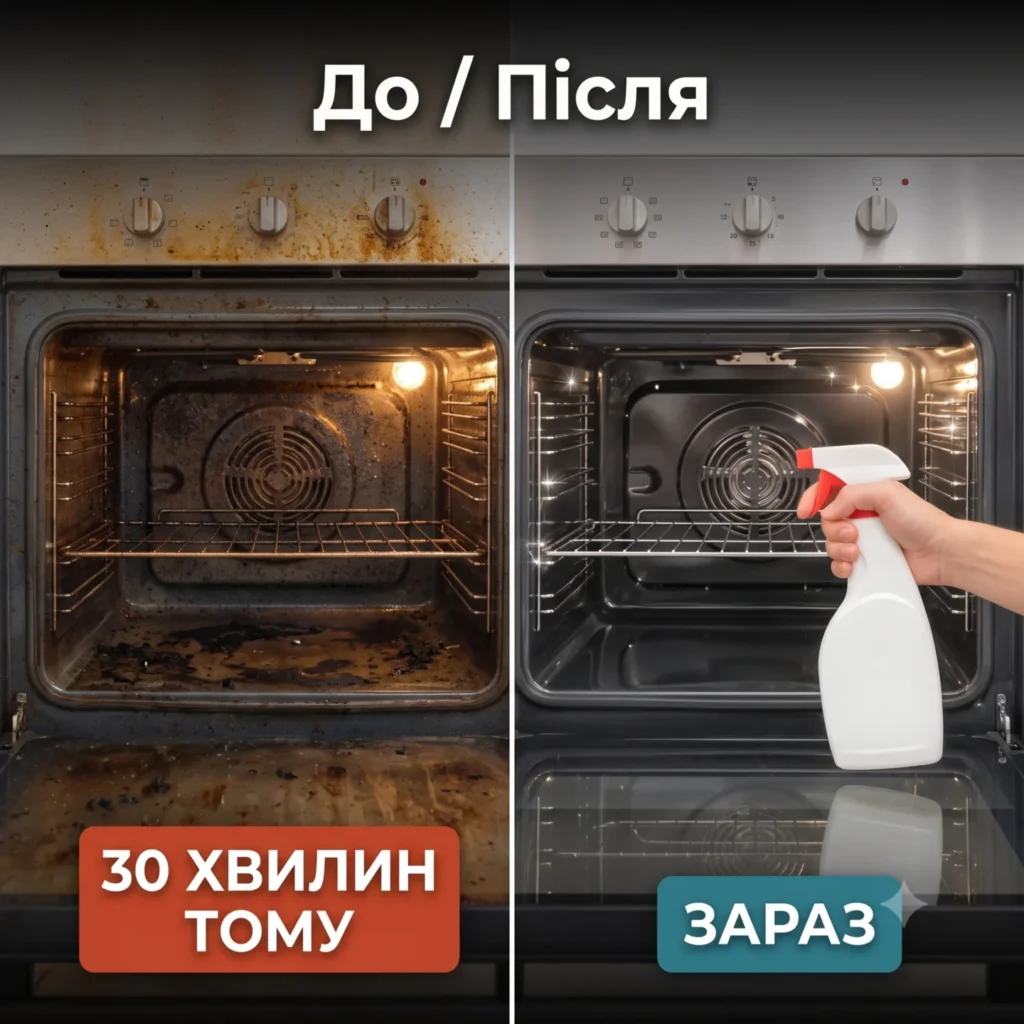
Examples of advertising creatives that work:






Successful advertising psychology is based on mechanisms that influence a person’s attention and motivation. It is precisely advertising triggers that make users stop on an ad and click through it, even if they did not initially plan to do so.
Let’s look at the main psychological triggers and how they work.
| Psychological trigger | How it works |
| FOMO | A person is afraid of missing an opportunity that others are already getting, so they act faster to avoid being left out |
| Curiosity | Unfinished or intriguing information creates tension that the brain wants to resolve, so the person clicks to find out the ending |
| Social proof | If others are already using the product or leaving positive reviews, it reduces doubts and increases trust |
| Scarcity | A limited quantity of a product or offer creates a sense of uniqueness and encourages faster action |
| Urgency | Time limits force immediate decision-making without postponing it for later |
| Authority | People trust experts or well-known figures more than faceless brands, so they are more likely to click on such ads |
| Audience pain points | When an ad accurately describes a person’s problem, they immediately recognize themselves and pay attention |
| Promise of results | A clear and understandable outcome removes uncertainty and motivates the user to proceed |
| Free | The word free lowers the entry barrier and removes the fear of losing money |
| Identification | A person responds to an ad if they recognize themselves, their situation, or their needs in it |
| Bandwagon effect | No one wants to be the last to find out about something popular |
| Provocation | A controversial or unconventional statement triggers emotion and the desire to verify or disagree |
| Pattern interrupt | An unexpected image or phrase at the start stops scrolling because the brain doesn’t manage to filter out the unusual |
| Greed | Attractive offers and big discounts activate the desire to take advantage now, even without purchase intent |
| Novelty | New products or approaches automatically attract attention because the brain perceives them as potentially important |
| Loss | The fear of losing is stronger than the desire to gain, so loss-framed messaging converts better |
Most successful creatives for targeted advertising are built on a similar logic: Hook → Problem → Solution → Proof → CTA. This structure helps guide the user step by step from the first contact with the ad to the desired action. Each stage serves a separate function: it captures attention, triggers an emotional response, demonstrates value, builds trust, and motivates the next step.
The hook is the first seconds of a video, a headline, or a striking visual element that makes the user stop scrolling. It determines whether a person will even engage with the offer. The best-performing hooks include unexpected facts, provocative questions, unusual angles or shots, or situations in which the audience instantly recognizes themselves.
After capturing attention, it is important to show a situation familiar to the potential customer. When a person sees their own problem, need, or daily difficulty, they begin to emotionally engage with the content. This approach helps create the feeling that the ad is speaking directly to them.
At this stage, the product or service should logically solve the stated problem. It is important to demonstrate not only the product itself but also the specific benefit it brings in real life. The clearer the result of using the product is shown, the easier it is for the user to imagine themselves as an owner and make a decision.
Customer reviews, real cases, numbers, achieved results, or short usage stories significantly increase trust. Social proof shows that the solution has already worked for other people, thereby reducing doubts before making a purchase or submitting a request. Even a few concrete facts can noticeably strengthen the persuasiveness of a creative.
Even an interested user will not always decide on their own what to do next. That is why it is important to clearly define the next step at the end: visit the website, leave a request, get a consultation, or place an order. A simple and clear call to action shortens the path to conversion and helps turn attention into real action.
Effective advertising creatives rarely appear by chance. They are usually the result of a clear strategy, audience understanding, and continuous testing. Viral performance cannot be guaranteed, but the chances increase significantly if you know how to build an advertising creative step by step and analyze the results of each launch.
Before developing the ad, you need to clearly understand who it is for. A target audience should be described in as much detail as possible: age, interests, geography, lifestyle, needs, habits, and motivations.
Any strong creative for Facebook, Instagram, or TikTok starts with understanding what matters to the potential customer. This can be a specific problem, inconvenience, or desire to achieve a certain result. If the ad precisely matches a person’s need, it generates significantly more interest.
The first seconds must immediately capture attention and stop the scrolling. This is achieved through unexpected questions, striking visuals, intrigue, or strong emotion. If the hook fails, most people will never reach the core message.
Even a strong idea needs validation. Customer reviews, real cases, statistics, usage results, or expert opinions help reduce doubts and make the offer more convincing. These elements significantly increase the willingness to engage with the ad.
It is not advisable to launch only one creative and expect maximum results. It is better to prepare several versions with different hooks, visuals, or texts and compare their performance. The testing period helps identify the best-performing variant and scale the budget accordingly.
Before launching a campaign, it is worth quickly checking whether the creative meets key performance criteria. The checklist below will help you assess how ready your TikTok advertising and ads on other social networks are for display, and whether they have a high chance of attracting attention and driving conversions.
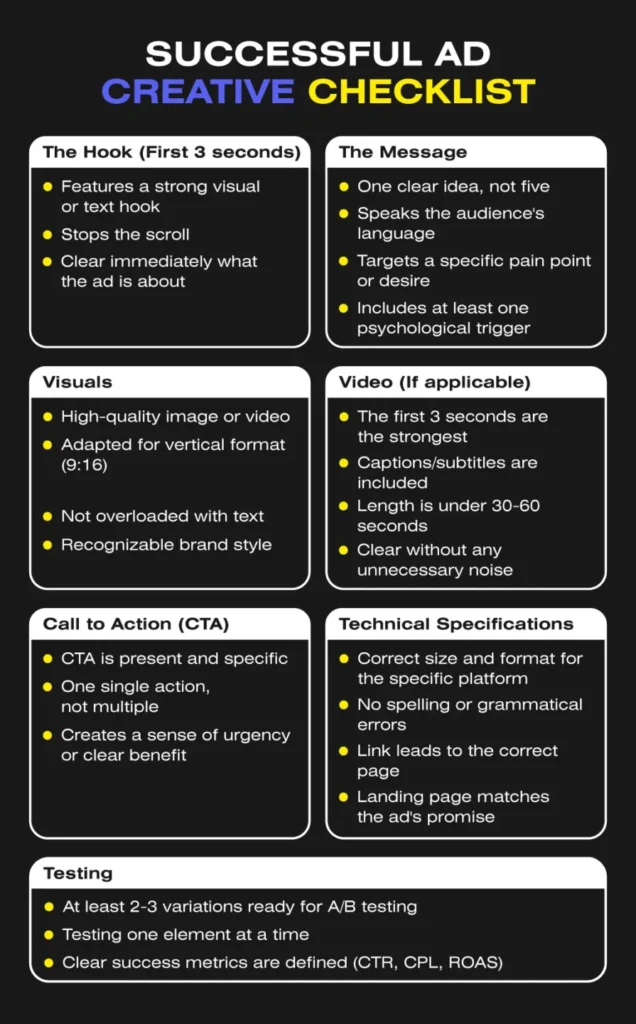
An effective advertising creative combines the right format, psychological triggers, and a clear structure that guides the user step by step toward the desired action. It is this comprehensive approach to creating advertising creatives for Instagram, TikTok, and Facebook that helps increase engagement and conversions, rather than relying on individual visual solutions or trends. It is important to regularly test new formats, analyze campaign results, and improve your creatives based on the data obtained.
If you need to buy advertising on Instagram, TikTok, and Facebook and get not just visually appealing banners but a systematic approach to promotion, it is worth working with professionals. The specialists of the internet marketing agency Lanet CLICK will help you develop effective creatives, choose TikTok hashtags, set up targeting on Facebook, TikTok, and Instagram, test different hypotheses, and optimize your budget to achieve maximum results.


What if an advertising campaign could find new customers on its own, create more relevant ads, and optimize its performance? […]
Clicked a link but saw a 404 Not Found message instead of the page you expected? This is one of […]

For digital companies, being included in professional rankings is an opportunity to demonstrate team expertise and confirm the success of […]
A good strategy, perfectly selected digital tools, and their effective application will allow the business to increase profits, grow the customer base, and form recognition and loyalty. Do you want something like that? Contact us.
You have taken the first step towards effective online marketing. Our managers will contact you and consult you soon.