Setting up Google Ads advertising for the service center site
How to increase conversions by 222% while cutting their cost by more than half

Input data
Client: home appliance repair service center in Kyiv.
Work completion period: 4 months.
Team: project manager, contextual advertising specialist, proofreader.
Problem: advertising campaigns worked without a clear structure and segmentation, which led to inefficient use of the budget. Part of the traffic was irrelevant, and the cost of the application was overestimated. Also, different types of user search intentions were not taken into account.
Goal: to increase the effectiveness of advertising campaigns in Google Ads for a Kyiv service center for repairing household appliances. The client wanted to receive more calls from potential customers without increasing the advertising budget, and even reducing the cost of each contact involved.
Tasks

optimize the structure of the advertising account;
increase the relevance of the advertisement to user requests;
reduce the cost of conversion;
increase the number of referrals from advertising;
redistribute the budget with a focus on effective campaigns.
List of works
Results
After the changes were made, the campaign immediately showed positive dynamics. Traffic has become cheaper and better – the share of users with a real need for repair has increased, and the rate of refusals has decreased. This is a natural result if the ad exactly matches the request: the person understands that he found what he was looking for, and is more likely to leave a request.
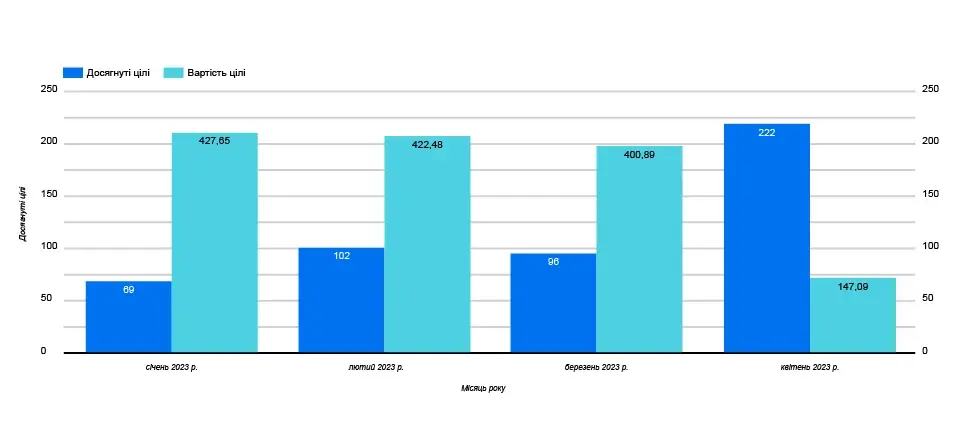
Indicators continued to improve monthly as data were accumulated and campaigns were subsequently optimized. Result for four months of work:
- number of conversions: +222%;
- conversion cost: -65.6%.
Results
After the changes were made, the campaign immediately showed positive dynamics. Traffic has become cheaper and better – the share of users with a real need for repair has increased, and the rate of refusals has decreased. This is a natural result if the ad exactly matches the request: the person understands that he found what he was looking for, and is more likely to leave a request.
Indicators continued to improve monthly as data were accumulated and campaigns were subsequently optimized. Result for four months of work:
- number of conversions: +222%;
- conversion cost: -65.6%.
- number of conversions: +222%;
- conversion cost: -65.6%.
Conclusion
Do you want the same?