


Lanet CLICK company received the Google Premier Partner 2026 status
Digital agency Lanet CLICK has been awarded Google Premier Partner 2026 status – the highest level of partnership in the […]



Every month, thousands of companies spend millions on advertising in Google Ads. However, a significant part of this money does not bring the expected results due to errors in settings and a lack of optimization. Then the business begins to look for reasons of budget drain. Let’s consider the most common mistakes and practical steps that will help increase the effectiveness of advertising and avoid unnecessary costs.
Google Ads budget drain occurs when advertising costs are growing rapidly, but the campaign does not bring in applications or sales. Investments do not pay off, and the ROI indicator – return on investment – decreases.
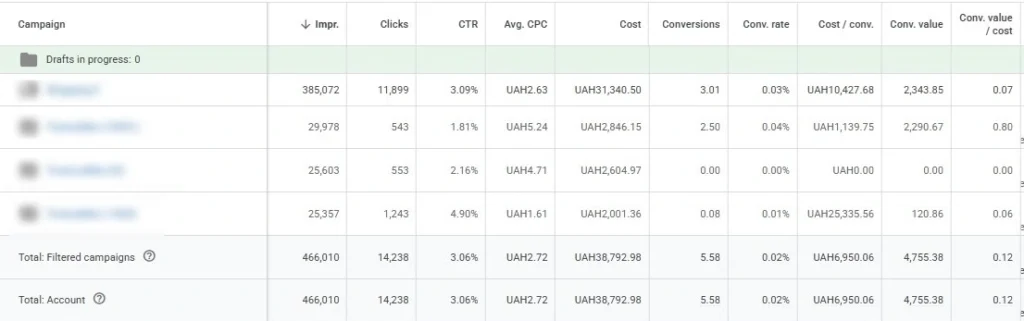
In search campaigns, money is debited for each click on the ad. In display campaigns, the budget is spent on clicks or banner impressions on partner sites. In the Performance Max format, the algorithms themselves distribute the budget between different channels, so the budget of a Google campaign can be quickly spent if the goals or audience signals are set incorrectly.
Even small mistakes in search advertising settings can lead to significant losses. Let’s consider the key factors that cause Google Ads advertising to fail and costs to increase rapidly.
One of the common reasons why Google ads do not bring orders is incorrectly defined campaign goals. For example, the system optimizes advertising for clicks, and the business needs applications or sales. As a result, the algorithm brings cheap traffic without conversions, which worsens ROI and increases CPL – the cost of a lead. When setting up Google Ads, it is important to immediately choose the right goal – conversions or ROAS (return on advertising spending).
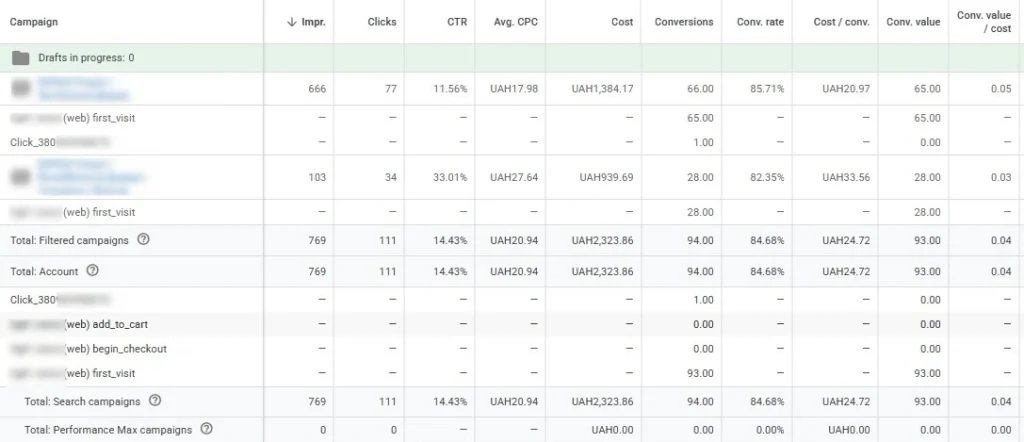
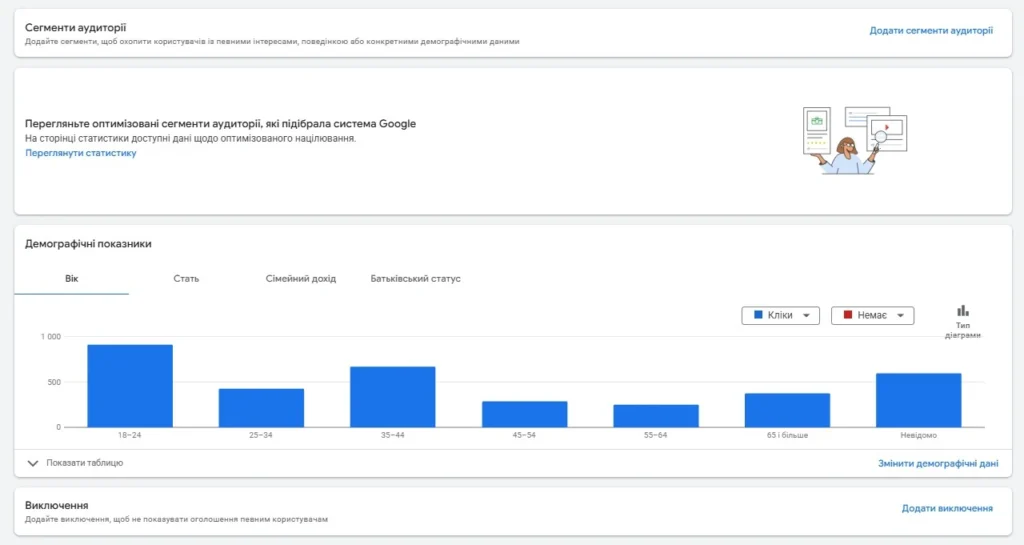
If the audience is set too broadly, ads are shown to people who are not interested in the product. In this case, clicks are paid for, but there are no sales. Segmentation by region, interests, devices and behavior helps to more accurately reach the target audience and reduce the cost per click (CPC). This is especially important when promoting a young site, when the budget is often limited.
Incorrectly selected keywords lead to impressions on irrelevant queries. This is especially true for broad match types, when the system can show ads on similar phrases. If keyword match types are not controlled, the budget is spent on random traffic.
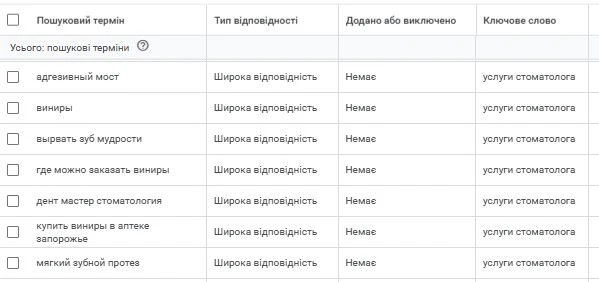
Malicious keywords are keyword phrases for which ads should not be shown. If they are not added, ads may appear on informational or irrelevant queries. As a result, clicks are paid for, but there are no conversions.
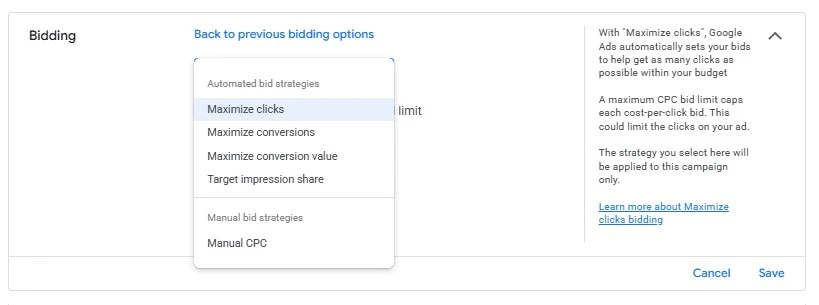
A poorly selected bid strategy can significantly increase costs. For example, an automatic strategy without sufficient data often overbids, which increases CPC. As a result, the budget is spent faster than the system can find conversions.
A campaign may perform poorly if the ad or page does not match the user’s query. Low CTR – click-through rate – signals algorithms about poor relevance. As a result, bids increase, and Google Ads advertising does not produce results. Regular testing of ads and improvement of landing pages help to increase efficiency.
Another common mistake is when the entire budget is spent on one campaign or type of traffic. As a result, effective requests receive fewer impressions, and weak ones eat up most of the costs. Competent allocation of the budget helps to find profitable directions faster.
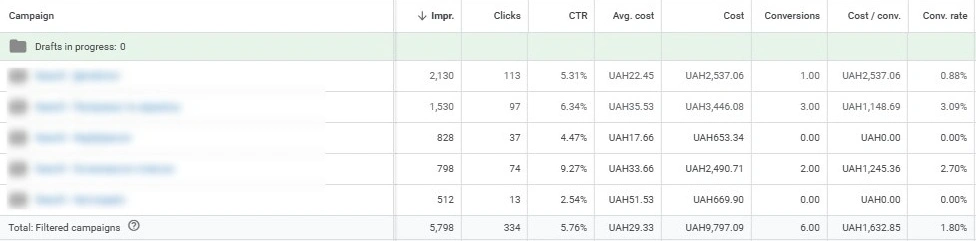
Without an analytics system, it is impossible to understand which campaigns bring in applications. If conversions are not configured or work incorrectly, algorithms optimize advertising based on incorrect data. In this case, costs increase, but advertising does not bring orders.
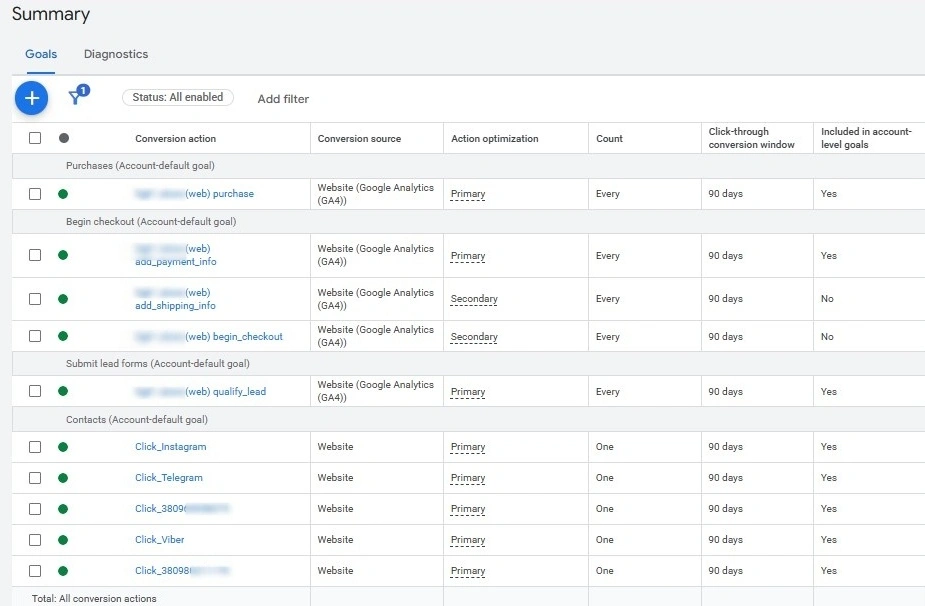

To understand that an advertising campaign is not working effectively, it is important to regularly analyze key settings and behavioral indicators. Often, budget drain begins not because of a single error, but because of a combination of several factors. That is why it is worth periodically checking the basic parameters of campaigns and comparing them with the correct settings.
| Parameter | Budget drain | Savings and result |
| Geography | Presence or interest | Presence only |
| Negative keywords | Missing or not updated | Updated 2-3 times a week |
| Conversions | Clicks, pageviews | Only targeted leads/sales |
| Networks | Search + GDN together | Search and GDN are separated |
| Landing page | Slow, irrelevant to keys | High relevance + speed + clear offer |
If most of the settings in your account are closer to the Budget Drain column, this is a signal that your campaigns need urgent optimization.
To understand how not to drain your advertising budget, it is important to regularly analyze campaigns and correct errors.
Basic checklist for optimizing Google Ads costs:
System optimization helps not only to stop the drain of the budget, but also to gradually increase ROI to get more applications without increasing costs.
At Lanet CLICK, we understand well how to avoid budget drain in Google Ads, because we regularly work with projects of varying complexity and correct configuration errors. For example, in a case study with Google Ads advertising for a children’s goods store, we completely restarted campaigns, optimized the account structure, and significantly increased advertising effectiveness.
When advertising actively spends money, but does not bring applications or sales, the budget is drained. Most often this is due to incorrect campaign goals, unsuccessful keywords, lack of negative keywords or errors in bidding strategies. Regular auditing, analytics and campaign optimization help to identify such problems in time and avoid ineffective spending.
If you do not have the experience and relevant knowledge to set up Google Ads yourself, it is worth entrusting it to specialists. Professional contextual advertising services will help you launch campaigns correctly, optimize the budget and get results faster. Contact the specialists of the Lanet CLICK digital agency to set up advertising without the risk of draining the budget.


Digital agency Lanet CLICK has been awarded Google Premier Partner 2026 status – the highest level of partnership in the […]
In 2026, trending hashtags on TikTok remain an effective tool for organic promotion, helping brands and content creators quickly reach […]

Today, artificial intelligence is an intermediary between the user and the site. Chatbots, AI search, and generative answers use the […]
A good strategy, perfectly selected digital tools, and their effective application will allow the business to increase profits, grow the customer base, and form recognition and loyalty. Do you want something like that? Contact us.
You have taken the first step towards effective online marketing. Our managers will contact you and consult you soon.